
[ad_1]
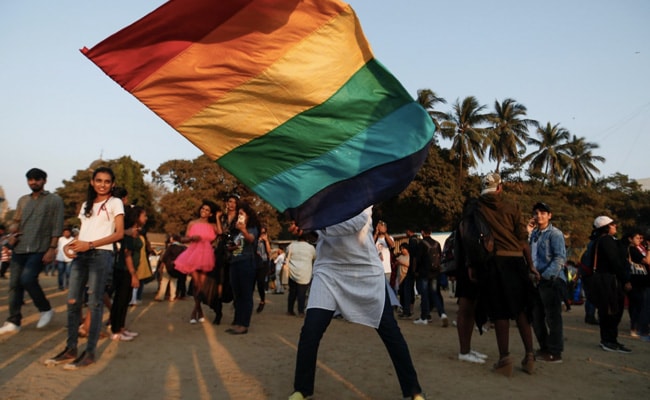
Same-Sex Marriage Case: A five-judge Constitution bench is hearing the petitions. (File)
New Delhi:
The Supreme Court begins hearing a batch of requests seeking legal recognition of same-sex marriages, a day after the government reiterated its opposition to any such legal move. Arguing against legal sanction to gay marriages, the centre yesterday termed such requests as “mere urban elitist views for social acceptance”.
A five-judge Constitution bench of the Supreme Court comprising Chief Justice of India DY Chandrachud, and Justices SK Kaul, Ravindra Bhat, Hima Kohli, and PS Narasimha, is set to hear the petitions today.
Here are the Live Updates on Same-Sex Marriage Case:
Get NDTV UpdatesTurn on notifications to receive alerts as this story develops.
Chief Justice DY Chandrachud
We also have to see this. (Refers to a chart)- If you see the US, Sept 1996, federal govt enacts the defence of marriage act which says federal law shall not recognise same sex marriage.
Then comes 2013, Windsor and then 2013 in the UK, the Act conferring upon same sex couples right to marry. And then 2022, US Respect for marriage act.
What we therefore have to consider is that these matters- even in the US, UK, the legislature has intervened- earlier by outlawing and later by recognising.
In the absence of legislation, how does the court go about it? Is there any indication in our legislation or legislative space where court can act?
Senior Advocate Mukul Rohatgi takes the court through the history of same sex marriages across the globe.
The definition of marriage in Obergefell v Hodges is classic. It was used in 2015 also.
See the definition after 2019, after the society has evolved- “the legal union of a couple”.
Read the definition of same sex in 1019- “ceremonial unit of two people of the same sex whether man or woman”. So government of India is following an antiquated edition of Black’s dictionary. If you’re following the same dictionary, follow the latest one.
You can’t follow a version which is 50 years old. I request, for example two petitioner in first petition- who are they? Two individuals who have a bond of faith, love- they want to reach the status of a married couple and have a family.
For them, your lordships have removed one block – that they can’t go to jail. Second step has to be affirmative which is the recognition of the right to marriage.
Society is resistant to change. Humans are resistant to change. So society follows what the law is and what the law is what is said in the parliament or this court.
Senior Advocate Mukul Rohatgi: Hindu marriage act, yes but main point is Special Marriage Act.
You can’t keep changing definitions, the law. So you have “unless the context otherwise requires”.
In Navtej, Sayara Bano, Puttaswamy- it was held that the court need not wait for legislative interference and if it is bought to the court’s notice that my fundamental rights are being restricted, the court’s duty is to act.
We are getting older. We also want respectability of marriage. Today what is the position? These people- call them queer, gay- if they go to places, people look at them. That is a restriction, infringement of my right under A 21
Your lordships have accepted the definition in Anuj Garg- which has accepted sex to mean sexual orientation. Sex doesn’t only mean male or female.
Also in NALSA, while dealing with transgenders (persons), there are passages after passages, that if you have to give them equality, the equality must be reflected positively.
NALSA said give them reservations years ago- nothing is done. Natvej Singh Johar said give this full publicity and today I read in Indian Express – nothing is done. Three ministries today say we haven’t done it, you’re not supposed to do it.
Chief Justice DY Chandrachud: So your analysis is two step- one, declaration of marriage as a fundamental right has been implicit in the constitutional guarantee of 14,19,21.
And then step two, this can also find recognition with an appropriate reading to Special Marriage Act. So you’re not going into broader issue of personal laws.
Senior Advocate Mukul Rohatgi says concept of marriage has changed over last 100 years. Earlier we had child marriages, temporary marriages, a person could marry any number of times – that also changed. There was a lot of protest to the new avatar of Hindu marriage act.
Constitution is a living document. The preamble says “equality, fraternity”.
Senior Advocate Mukul Rohatgi starts arguments
- Lordships may hear any state but just as a preface- anything Solicitor General has said doesn’t hinge on maintainablity of a petition under 32 by an individual who complaints that his fundamental rights are being restricted. I have a right to approach this court.
- I have a right to be heard- my grievance may be right or wrong- your lordships will decide upon that.
- We are persons who are of the same sex. We have, acc to us, the same rights under constitution as heterosexual group of society. Your lordships have held that. The only stumbling block on our equal rights was 377.
- Criminality is now gone. The unnatural part or order of nature is gone from our statute. So therefore, our rights are equal.
- If our rights are identical as held by the State, then we want to enjoy the full extent of our rights under 14,15,19,and 21.
- We want privacy in our homes and not face stigma in public places. So we desire same institution between two people as is available to others- the concept of marriage and family. Because marriage and family is respected in our society.
- There is no reason why once our rights are identical, we don’t get this. That has been the development in US and other states. We want a declaration that we have a right to marry, that right will be recognised by the State & will be registered under Special Marriage Act
- Once that happens, society will accept us. The stigma will only go once the state recognises it. That will be full and final assimilation.
- Chief Justice DY Chandrachud to Solicitor General Tushar Mehta you cannot tell us how to decide.
- Solicitor General Tushar Mehta says this is a very sensitive matter.
- Chief Justice DY Chandrachud says we want to know what they have to argue
- Chief Justice DY Chandrachud says we will hear you to Solicitor General Tushar Mehta.
- Let’s see what the petitioner and we will say what we have in mind.
- Solicitor General Tushar Mehta says it’s not maintainable since all states might not be on the same page .
- We are still questioning whether it’s for courts to decide on its own.
A constitution bench of the Supreme Court begins hearing the batch of petitions seeking legal recognition for same-sex marriage in India.
The bench hearing the petitions comprises Chief Justice DY Chandrachud, Justice Sanjay Kishan Kaul, Justice Ravindra Bhat, Justice Hima Kohli, and Justice PS Narasimha.
A court order recognising same-sex marriages would mean a virtual judicial rewriting of an entire branch of law, the centre argued yesterday and said the court must refrain from passing such “omnibus orders”. Calling marriage an “exclusively heterogenous institution”, the Centre said the question of considering it equal to the existing concept of marriage “seriously affects the interests of every citizen”.
[ad_2]
Source link